Tina Schröder · 19 September 2026
Exploring Resistor Networks in Signal Filtering Applications for Hobbyist Projects
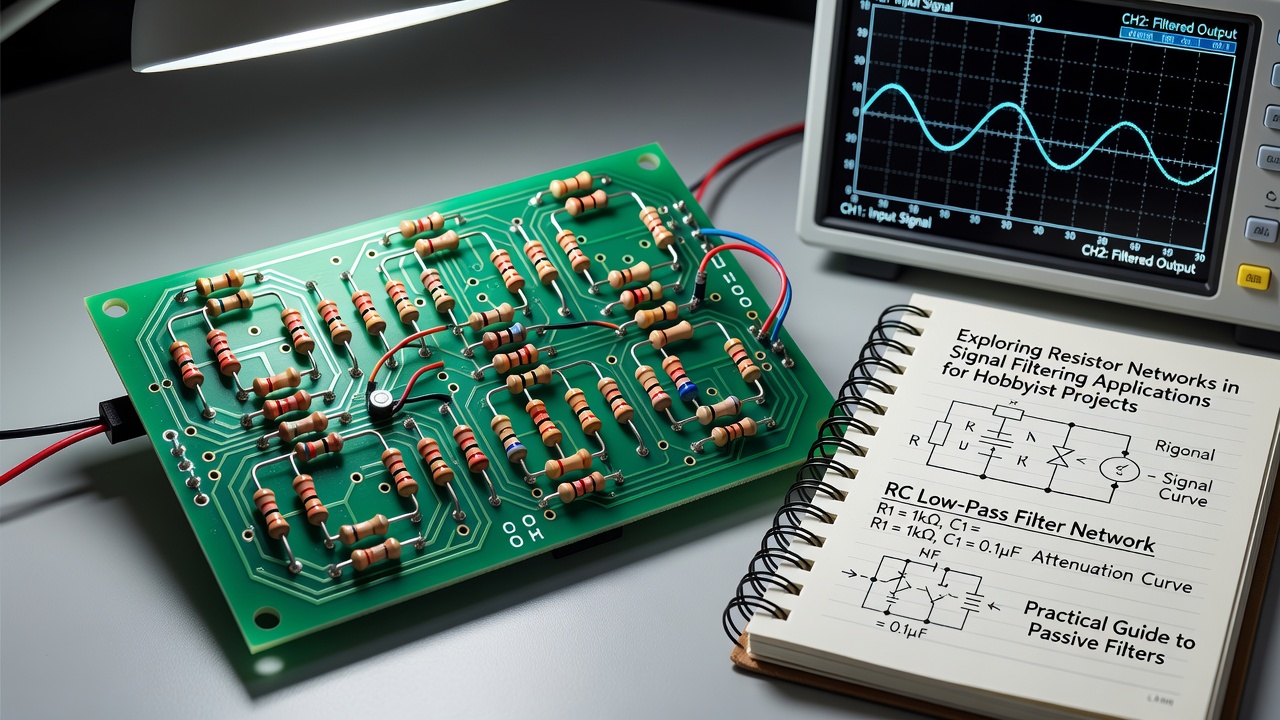
Resistor networks play a central role in signal filtering applications where hobbyists combine passive components to shape frequency responses in audio circuits, sensor interfaces, and communication modules, and these arrangements allow precise control over signal attenuation while keeping designs simple and cost-effective for home workshops. Observers note that basic series and parallel resistor combinations form the foundation for more complex ladders and dividers, which integrate with capacitors to create low-pass, high-pass, and band-pass filters that remove unwanted noise from incoming signals.
Fundamentals of Resistor Network Design
Engineers and hobbyists rely on resistor networks to establish voltage division ratios that determine cutoff frequencies when paired with capacitors, and calculations often start with the time constant formula where resistance values directly influence how quickly a filter responds to changing signals. Data from component suppliers indicates that standard resistor values in the E12 or E24 series provide sufficient granularity for most filtering tasks, whereas deviations from calculated values can shift filter performance by several decibels across the audio spectrum. Those who've studied basic circuit theory understand that equivalent resistance in a network follows straightforward parallel and series rules, yet real-world tolerances require verification with multimeters during assembly.
Common Filter Topologies for Hobby Applications
Simple RC low-pass filters use a resistor in series with a capacitor to ground, allowing low frequencies to pass while attenuating higher ones, and hobbyists extend this approach with resistor networks that include multiple stages for steeper roll-off characteristics. R-2R ladder networks appear frequently in digital-to-analog converter projects where precise current summing creates analog outputs from binary inputs, and researchers have documented how these ladders maintain linearity across eight to twelve bit resolutions when resistor matching stays within one percent. High-pass configurations reverse the component positions so capacitors block DC while resistors set the frequency knee, and enthusiasts often cascade several stages to achieve sharper transitions without introducing active components that demand additional power supplies.
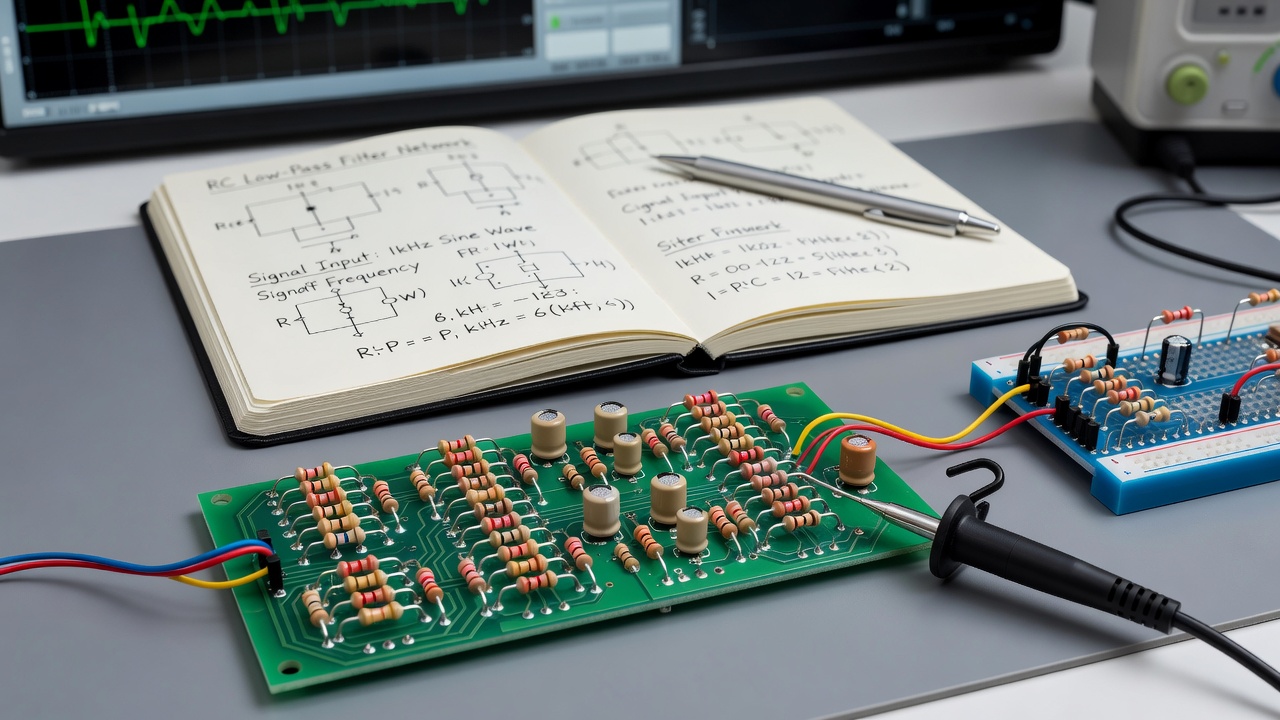
Band-pass filters combine both high-pass and low-pass sections around a resistor network, which isolates a narrow frequency range useful in radio tuning or tone control circuits, and measurements show that component placement order affects overall Q factor and insertion loss. In September 2026 hobbyist forums continue to share updated simulation files that model these networks with free software tools, helping builders predict behavior before soldering begins.
Integration with Hobbyist Projects
Audio preamplifiers for guitar effects often incorporate resistor networks to tame high-frequency hiss before amplification stages, and builders report success when selecting metal film resistors for lower noise floors compared with carbon composition types. Sensor signal conditioning for temperature or light measurements benefits from resistor networks that provide stable reference voltages, and studies from the National Institute of Standards and Technology highlight how consistent resistance values improve measurement repeatability in portable data loggers. NIST publications on measurement standards describe calibration methods that hobbyists adapt for their own filter prototypes. Motor control circuits use resistor networks in feedback paths to filter pulse-width modulation artifacts, preventing false triggers in downstream logic while maintaining smooth operation.
Calculation Methods and Component Selection
Design begins with determining the desired cutoff frequency using the formula f equals one over two pi R C, after which hobbyists solve for resistor values that match available capacitor sizes, and spreadsheet tools simplify iteration when multiple stages interact. Tolerance stacking becomes significant in networks with five or more resistors because cumulative errors can alter filter response by up to ten percent, so observers recommend sorting components or using precision series when budgets allow. Temperature coefficients matter in outdoor projects where resistance drift shifts cutoff points, and data sheets from manufacturers list these parameters for common resistor families. Those building portable devices often select surface-mount packages to reduce parasitic inductance, which otherwise limits high-frequency performance even in simple passive filters.
Conclusion
Resistor networks continue to serve as accessible building blocks for signal filtering in hobbyist electronics, enabling frequency-selective behavior through straightforward combinations of standard parts and basic mathematics. Continued sharing of verified designs across online communities supports ongoing refinement of these techniques for new applications in audio, sensing, and control systems.